
A recent toilet repair in Boronia
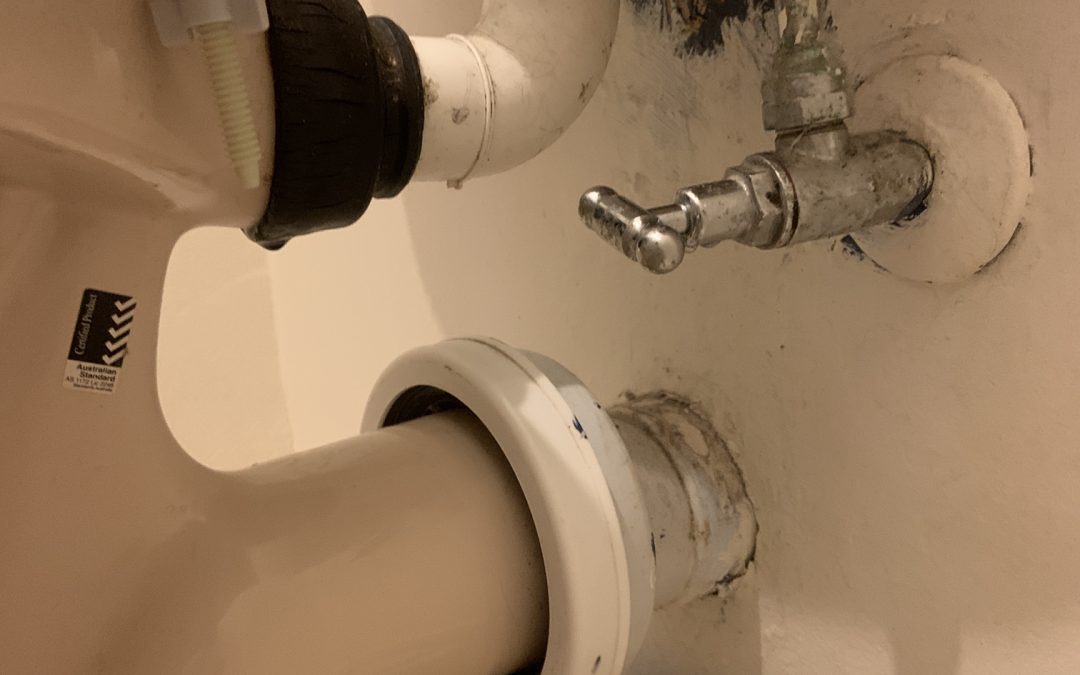
We recently attended a home in Boronia where the toilet had developed a leak and an unpleasant smell that just wouldn’t go away. On inspection, we found a worn flush cone rubber and a leaking pan collar. A small container had been placed underneath the pan collar to catch the leaking water.
We replaced the worn components, restored the seals and tested the toilet to make sure everything was working properly.
These are relatively common problems as toilet seals and rubber components naturally deteriorate with age – but because the leak and smell can often be hidden underneath or behind the toilet, they’re not always immediately obvious.
So what exactly do these two parts do, and why do they eventually start leaking?
Flush Cone Rubbers & Pan Collars – What They Do and Why They Leak
Toilets have a few small rubber and plastic components that don’t get much attention – until they start to wear out.
A worn flush cone rubber or leaking pan collar can cause leaks, unpleasant smells and problems around the base of your toilet.
And because these parts naturally deteriorate over time, they’re a fairly common plumbing repair.
In the photo above, you can see both problems. The black flush cone rubber has become worn and is cracked, while the pan collar is leaking and a plastic container has been placed underneath to catch the water.
What is a flush cone rubber?
The flush cone rubber is the seal between the toilet cistern and the pan. When you flush, water leaves the cistern and travels through this connection into the toilet pan. The rubber creates a watertight seal around the connection.
Over time, the rubber can become hard, worn or deteriorated. When that happens, water can start leaking from the connection when the toilet is flushed.In the photo above, you can see how worn the rubber has become.
What is a pan collar?
The pan collar is the connection and seal between the toilet pan and the waste pipe underneath it.
Its job is to create a watertight and gas-tight connection, helping prevent wastewater and sewer gases from escaping around the base of the toilet. If the pan collar deteriorates or the seal fails, you may notice water around the base of the toilet, particularly after flushing.
Why is my toilet leaking around the base?
A toilet leaking around the base can have several causes. It could be a failed or deteriorated pan collar, but other possibilities include:
- A damaged or cracked toilet pan
- A worn seal or connection
- A leaking cistern or water supply connection
- Condensation running down the toilet
- A leak from the flush pipe or flush cone
- The toilet not sitting or sealing correctly
Finding the source of the water is important because water appearing around the base doesn’t necessarily mean the pan collar is the problem.
A plumber can identify where the water is actually coming from before replacing anything.
Can a leaking toilet smell?
Yes. A failed seal around a toilet can contribute to unpleasant smells.
The pan collar helps create a seal between your toilet and the waste pipe. If that seal has deteriorated, sewer gases may be able to escape. A small amount of stagnant water from an ongoing leak can also contribute to an unpleasant smell. If you’ve cleaned your toilet thoroughly but the smell keeps coming back, the problem may be underneath or behind the toilet rather than something you can clean away.
Sometimes the smell won’t disappear until the failed seal or leaking component is replaced.
It’s worth getting the source checked rather than continually reaching for the disinfectant.
Can I fix a flush cone rubber or pan collar myself?
Replacing these seals isn’t always simple and best left to a plumber. Depending on the toilet and the location of the failed seal, the toilet pan may need to be disconnected or removed to access the pan collar properly. The old seal then needs to be removed, the area prepared and the new seal fitted correctly before the toilet is reconnected and tested.
If the toilet isn’t reseated correctly, you can end up with another leak — or a toilet that isn’t properly sealed.
How long do these parts last?
Flush cone rubbers, pan collars and other toilet seals are designed to last for years, but they’re not designed to last forever. They’re exposed to water, movement, cleaning products and general use, and rubber naturally deteriorates with age. How long they last varies depending on the age and type of toilet, the materials used and how much the toilet is used.
A toilet that’s been working perfectly for years can eventually need a relatively small seal replaced simply because the component has reached the end of its useful life.
How much does it usually cost?
The cost depends on which component has failed and how accessible it is. Replacing a flush cone rubber or pan collar is generally a relatively inexpensive repair compared with dealing with water damage caused by an ongoing leak. The important thing is finding the actual source of the leak first so you’re fixing the right problem.
When should I call a plumber?
It’s worth getting your toilet checked if:
- You notice water around the base of the toilet
- The toilet leaks when you flush
- You have to put a dish or container underneath the leak
- There’s a persistent sewer or musty smell
- The toilet rocks or moves
- A seal or rubber component looks visibly worn
- You’ve tried cleaning the toilet but the smell keeps returning
- The leak keeps coming back after you’ve dried the area
A small leak can be easy to ignore, but leaving it can allow moisture to continue getting into the surrounding floor or cabinetry.
Frequently Asked Questions
Why is my toilet leaking when I flush?
A leak that only appears when you flush can be caused by a worn flush cone rubber, a leaking flush pipe connection or a failed seal around the toilet pan. The exact cause needs to be identified before replacing the part.
Why does my toilet smell even after cleaning?
If the smell keeps returning despite cleaning, it may not be a cleaning problem. A failed pan collar or another faulty seal can allow sewer gases to escape, while stagnant water from a leak can also cause unpleasant smells.
Can a leaking toilet damage the floor?
Yes. Water that repeatedly escapes around the base of a toilet can damage flooring, cabinetry or surrounding materials. The amount of damage depends on how much water is escaping and how long the leak has been present.
Do I need a new toilet if it’s leaking?
Probably not. Many toilet leaks are caused by worn seals, rubbers or connections rather than a problem with the toilet itself. A plumber can determine whether the leak can be repaired or whether the toilet has another underlying issue.
Can a flush cone rubber be replaced?
Yes. A worn flush cone rubber can generally be replaced without replacing the entire toilet.
What is a pan collar?
A pan collar connects the toilet pan to the waste pipe and helps create a watertight and gas-tight seal. If the collar or its seal fails, it can contribute to leaks and unpleasant smells around the base of the toilet.
Need a leaking toilet checked?
If your toilet is leaking, smells despite regular cleaning, or you’re finding water around the base, H2PRO Plumbing can find the cause and explain what needs to be repaired.
Fast, friendly, same day service for all your tap and toilet repairs. Local Plumbers with hundreds of Five Star Reviews ⭐️
☎️ Call H2Pro Plumbing on 9844 1444 or book online.